Vitaliy Pavlovych Buigashev is a Ukrainian monumental painter, the author of frescoes, mosaics, tapestries, and paintings that adorn the interiors and exteriors of buildings in various parts of Ukraine and beyond.
Born on the eve of World War II (January 23, 1938) in the city of Voroshilovgrad (now Luhansk), the future artist experienced the full drama of the era. In 1944, his father, Pavlo Lavrentiyovych Buigashev, was killed near Odesa, and in the same year, his mother, Olena Petrivna Pastukhova, passed away. As a result, the six-year-old boy was placed in the Voroshilovgrad orphanage.
After the war, professional commissions selected gifted orphaned children for further education in fine arts and music. The artistic talent of first-grader Vitaliy Buigashev was noticed, and for four years (1946–1950), he became a student at the Kyiv Orphanage for Talented Children. It was during those distant youth years that Vitaliy developed a passion for classical music. In the artist’s workshop, the works of Bach, Vivaldi, and Mozart always played, inspiring him and fueling his creativity during moments of reflection and artistic exploration. The future painter regularly attended drawing classes at the art school affiliated with the Kyiv Art Institute (now the National Academy of Fine Arts and Architecture, NAOMA).
The second period in Vitaliy Buigashev’s life (1950–1958) — the Luhansk period — was not much different from the lives of many representatives of the post-war generation: living in an orphanage and studying at a vocational school to become a locksmith. However, working at a factory did not prevent the young man from attending an art studio and evening school. Thanks to his perseverance and an unyielding desire to pursue art, Vitaliy Buigashev entered the Luhansk Art School in 1959, but in the same year, he was drafted into the Soviet Army.
By 1968, the young artist was admitted to the painting faculty of the Kyiv Art Institute. After his second year, when students were assigned to workshops based on portfolio reviews, Vitaliy Buigashev became a student of the outstanding Ukrainian artist Tetiana Nilivna Yablonska.
During his studies at the institute (1968–1974), the artist found the essential support every creator needs: a Mentor—Tetiana Yablonska, an inspiring image of an innovative artist—Anatol Petrytskyi, and a Guardian Angel and Muse—his wife, Alla Buigasheva.
For his diploma defense, Vitaliy Buigashev presented the tapestry Steelworkers (1974). Tetiana Yablonska imparted to her student a fundamental understanding of the principles of visual art: a sense of form, rhythm, and color harmony. The works of Anatol Petrytskyi resonated deeply with the young artist’s philosophical reflections and his monumental approach to artistic thinking.
After graduating from the institute in 1974, Vitaliy Buygashev worked at the Kyiv Monumental Art Association, participated in republican and all-union exhibitions, and in 1982 became a member of the USSR Artists Union. The Kyiv period of the artist’s creative work began in the 1980s.
The scale of works and variety of techniques are impressive: tapestry, encaustic, mosaic, plaster relief, and easel painting. The period of the 80s was a kind of immersion into the elements of Ukrainian folk culture and European classical mythology. This is how the tapestries “Wedding” (1980) and “Winter Festival” (1981) appeared. Greek antiquity captivated Vitaliy Buygashev with images of ideal gods, courageous heroes, and scholars devoted to their work. In 1986, the composition “Sea” (encaustic) appeared, where a man, woman, and child, like ancient gods, seem to float in the cradle of European civilization. The heroes build a ship and boldly move in search of the golden fleece (“Argonauts,” tapestry, 1987).
The power of the elements was embodied in the large-scale painting “Neptune” (encaustic, 1988). The legendary musician touches the strings, trying to maintain harmony (“Orpheus,” mosaic on relief, 1986). The composition “Hippocratic Oath” (plaster relief, 1985) builds a plastically harmonious world of ancient harmony.

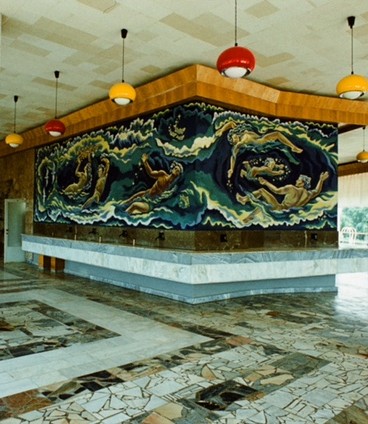
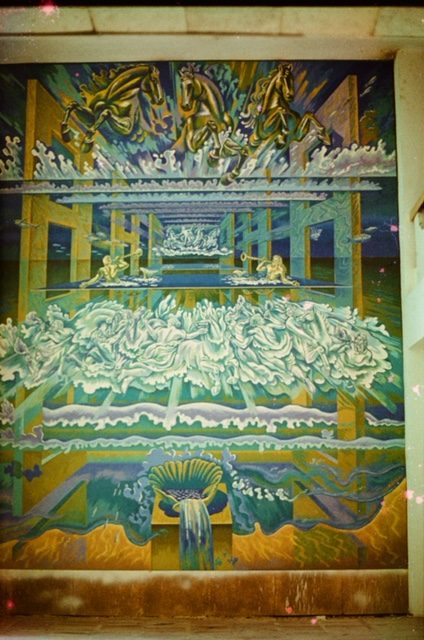
In the works of the 1980s, the characteristic features of Vitaliy Buygashev’s creativity can be traced: the depth of creative ideas and the high artistic level of his works. The painting composition “Wave” (canvas, oil, 1989) is constructed as if the powerful force of water is trying to break beyond the canvas, moving toward the viewer and destroying everything in its path. Despite the light, classically white-blue coloring, the canvas impresses with a sense of approaching catastrophe. The wave has pushed a mutilated ghost ship to shore, while the water element, led by Neptune in a chariot, continues to advance. This is how the artist felt the changes in society at the end of the 80s, which destroyed the old life and brought closer a new one that no one could predict. The struggle of good versus evil, the forces of reason against the temptations of human life, was embodied in the dramatic composition “Sinful Angel” (canvas, oil, 1989).
The 1990s became a unique period in Vitaliy Buygashev’s creative work, a time of contemplating the meaning and value of human life. The depth of philosophical ideas was embodied using a rather complex technique — encaustic, which required from the artist concentration and certain dexterity in applying paint to the surface, and virtuoso command of the language of monumental art.
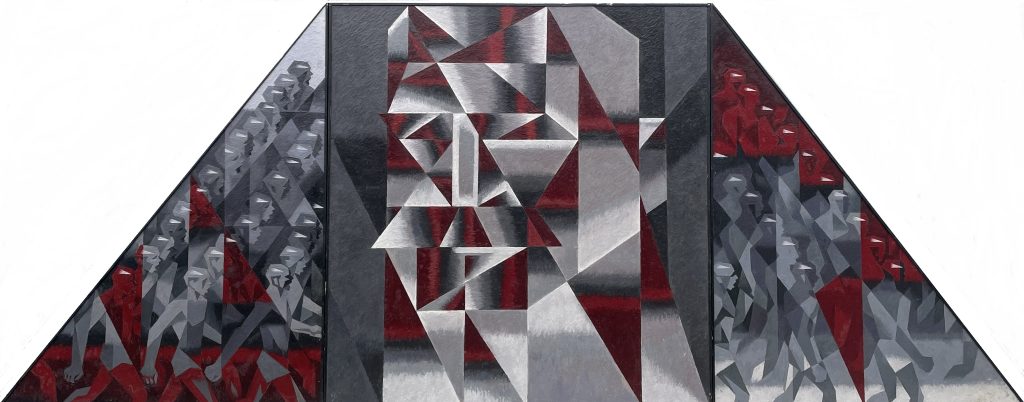
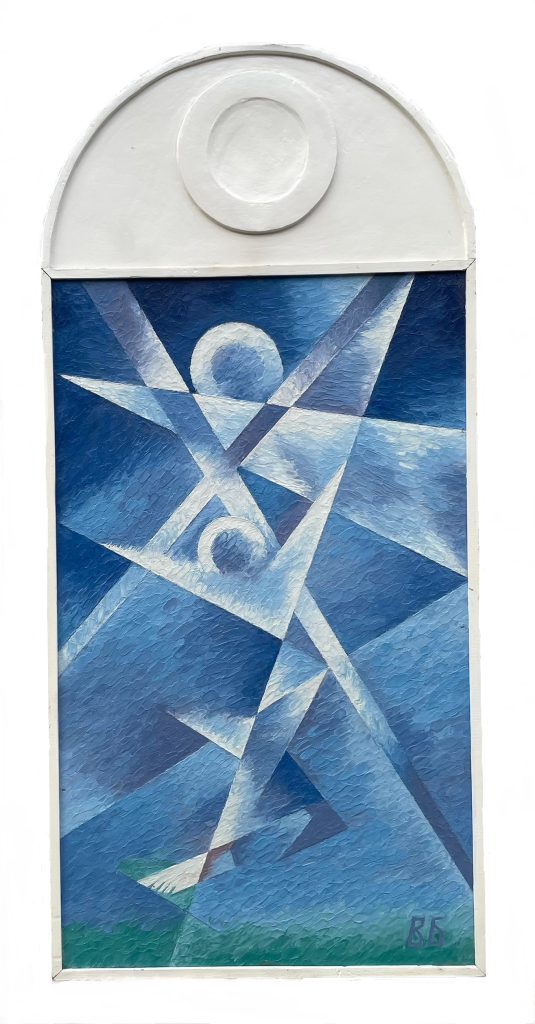
The reflections on the individual’s place in human history were captured in the triptych “Requiem” (1995, encaustic), where the progress of human masses “covers” the monumental portrait of the Leader. Similarly, the “Horseman” (1996, encaustic) moves relentlessly toward the viewer on a red horse. The recognizable image of total power appears in the portrait “Blinded” (1997, encaustic). The depiction of a man in a tricorne immediately recalls the famous French tyrant. The struggle between good and evil, the confrontation between power and people — such large-scale themes dominantly sound in Vitaliy Buygashev’s canvases of the 90s. The composition “The Result” (1998, encaustic) truly became a certain boundary between the 20th and 21st centuries. The struggle continues, but the forces of good must prevail, and Vitaliy Buygashev creates the composition “The Coming” (1998, encaustic) with white-blue angels bringing news of salvation.
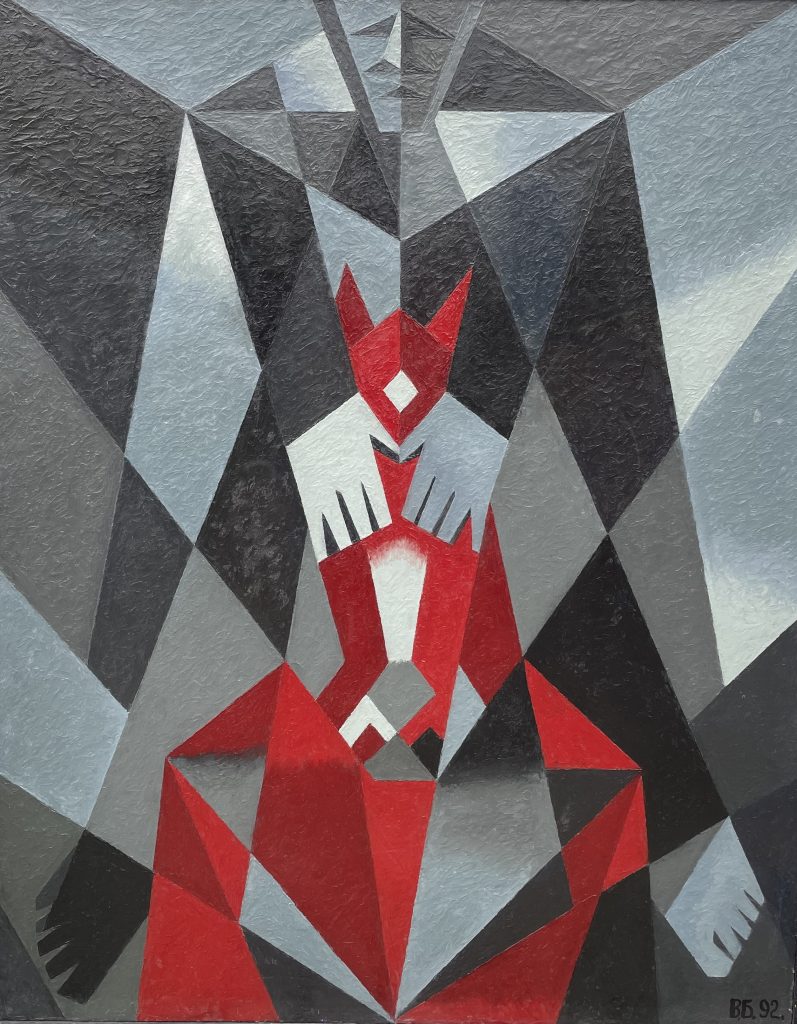
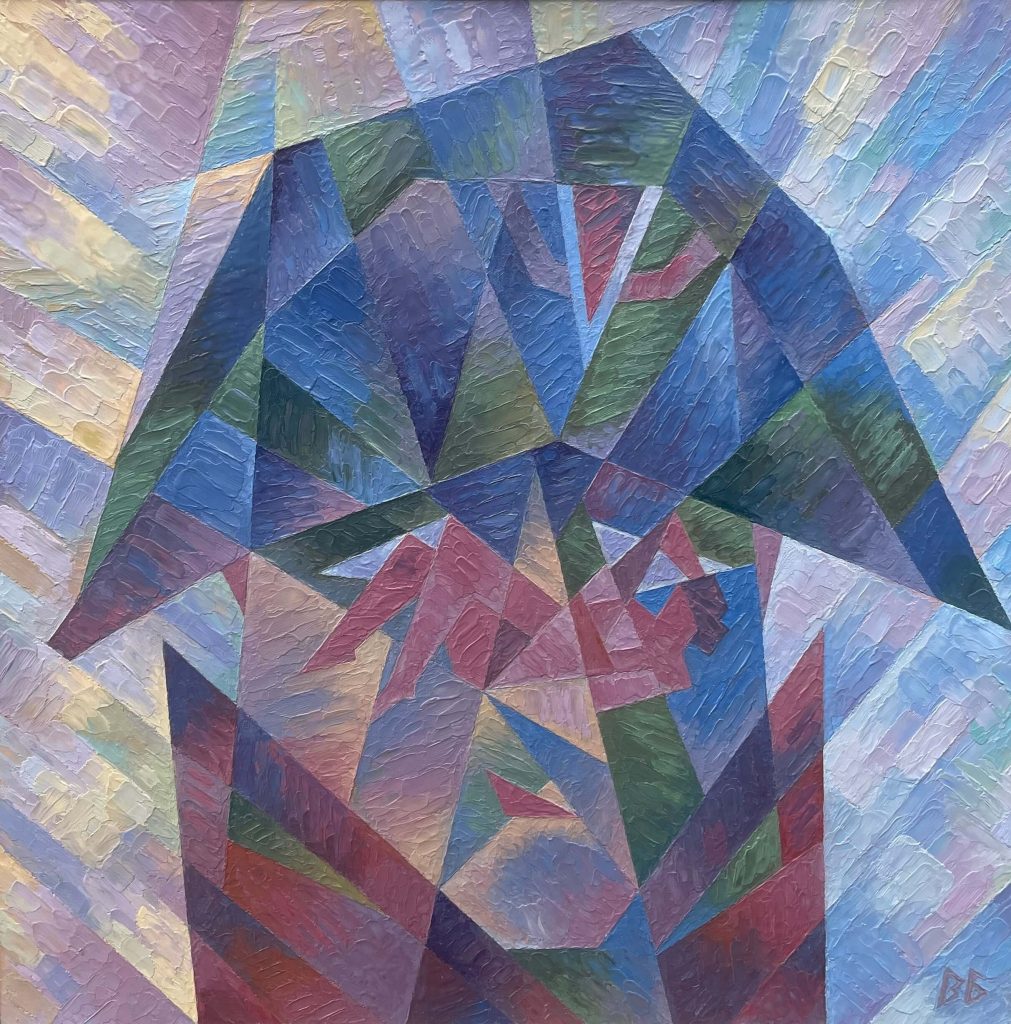
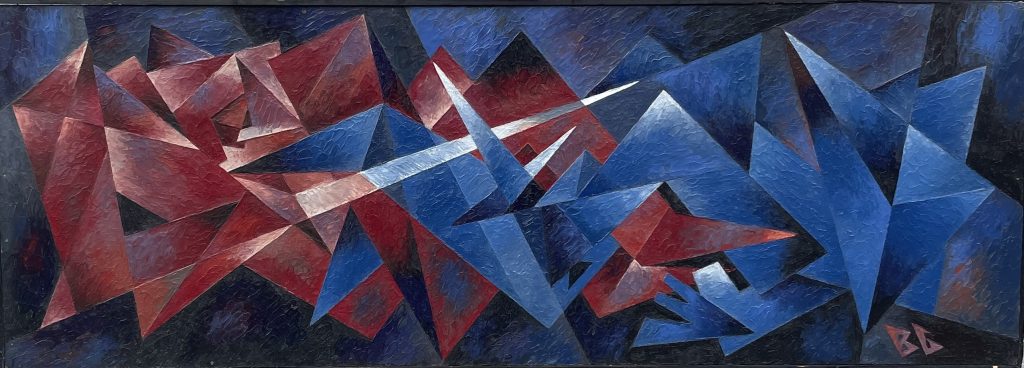
Attempts to once again gather strength and rise above doubts and uncertainty were embodied in the artist’s most dramatic works of the early 21st century – “Sisyphean Labor” (2000, encaustic) and “Father, Take My Soul” (2000, encaustic). The image of the luminous crucified Christ, built on contrast with the night darkness, became key not only in Vitaliy Buygashev’s creative work but also in the monumental art of Ukraine as a whole, as it absorbed all the anxieties and premonitions of the people of the independent state at the beginning of the 21st century.
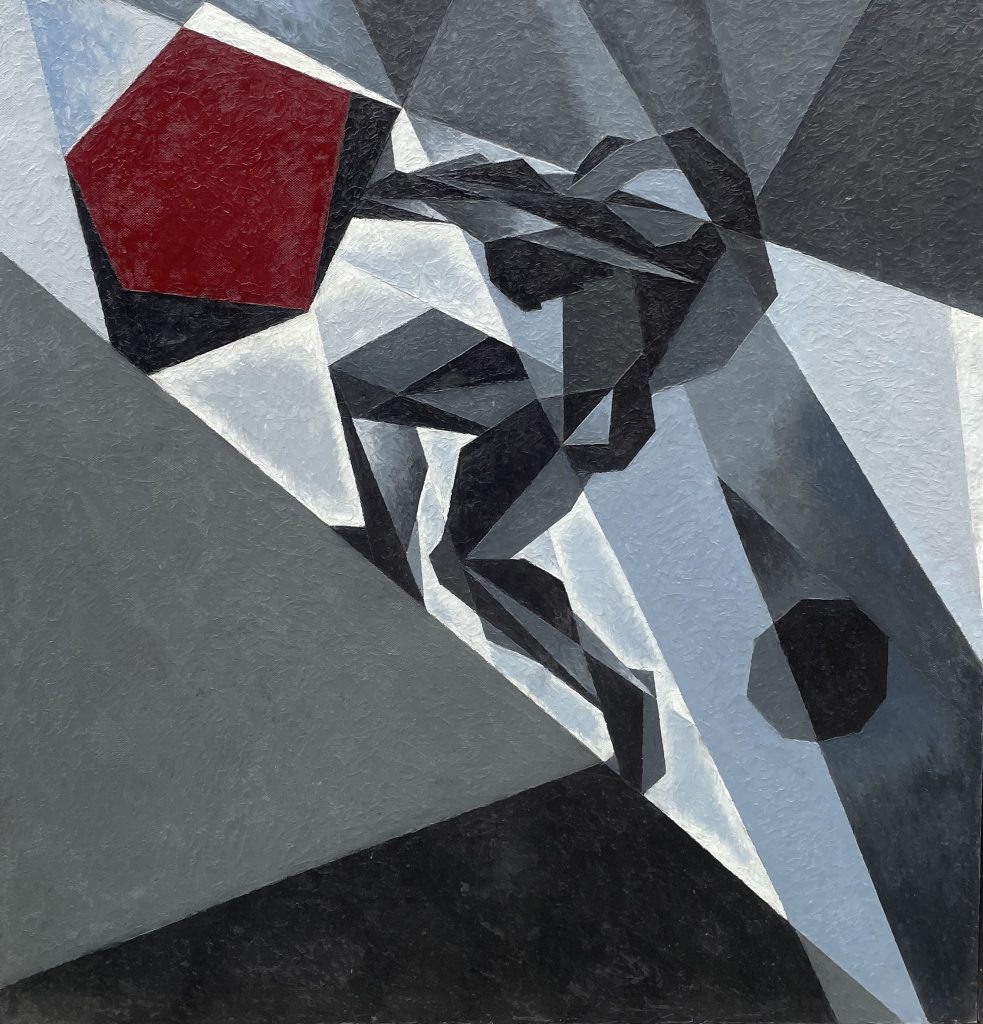
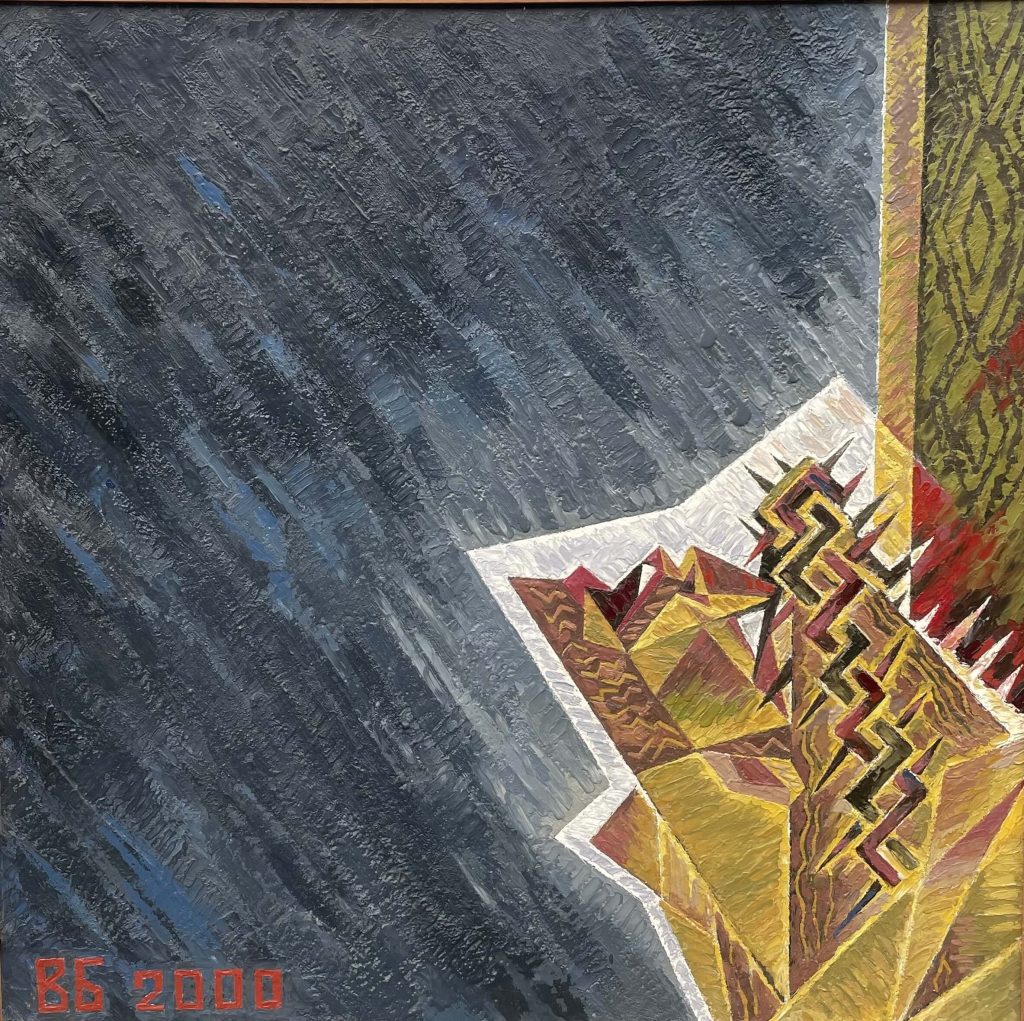
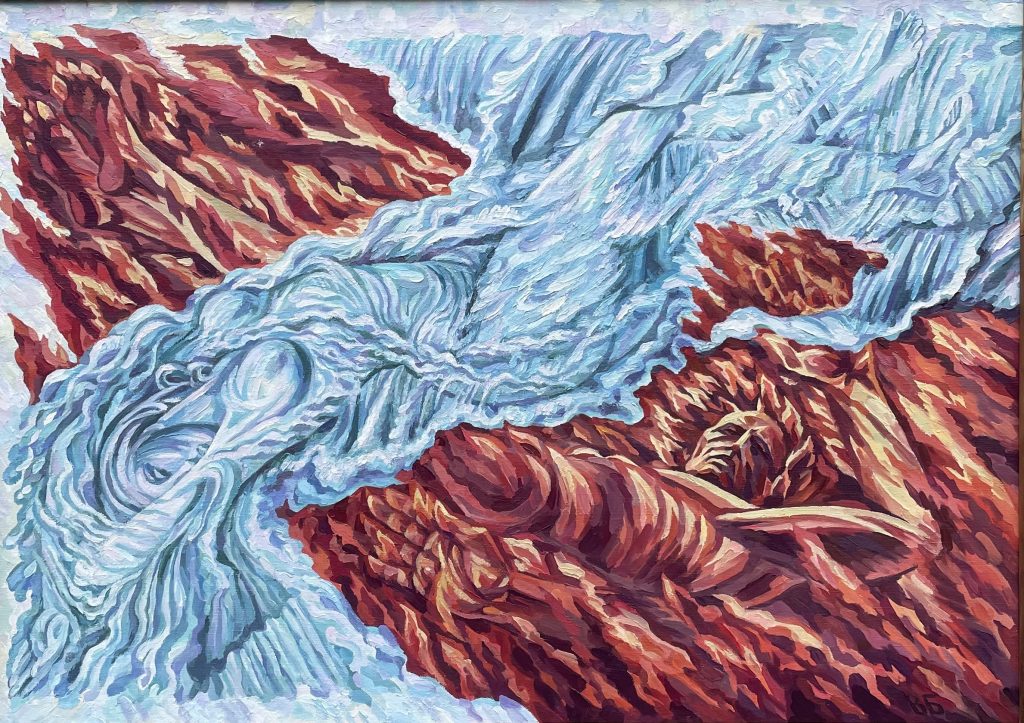
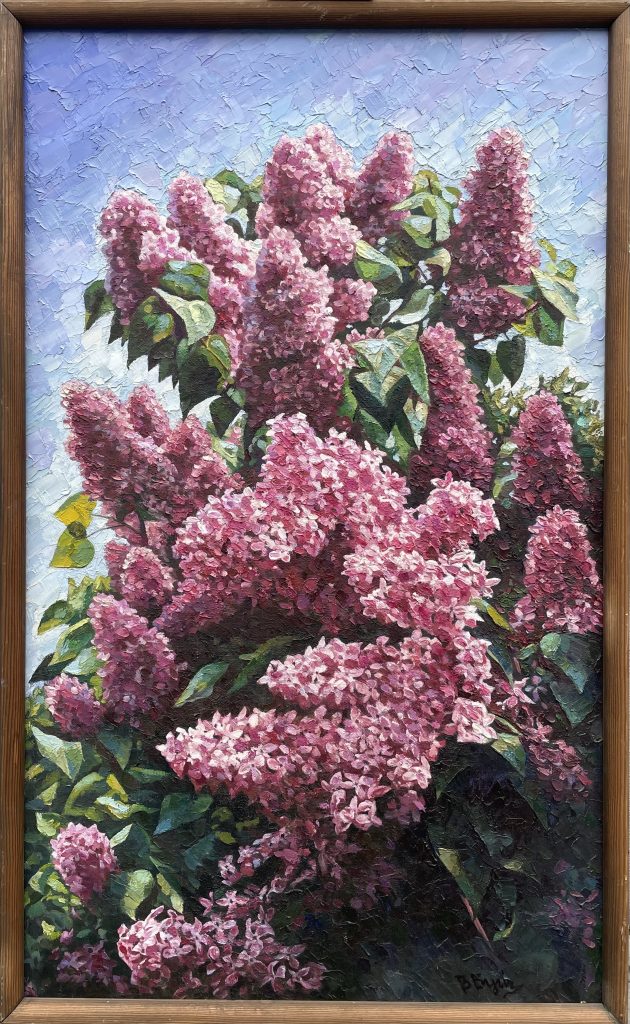
The monumental painting of the 90s gradually acquired more intimate features in the following decade; Vitaliy Buygashev returned to the techniques of tapestry and oil painting, to the academic traditions of the national school. Along with symbolic interpretations of natural elements (“Fire and Water,” 2008) and allegories (“Music,” 2007), landscape images of Orthodox holy sites appeared (series “Holy Cities,” 2003). Vitaliy Buygashev scrutinized the world around him. The artist invited viewers to see beauty in fragrant flowers (“Lilac,” 2011), in the plasticity and allure of the female body (“By the Sea,” 2009), and in the shimmering wings of restless birds (“Bullfinches,” 2007).
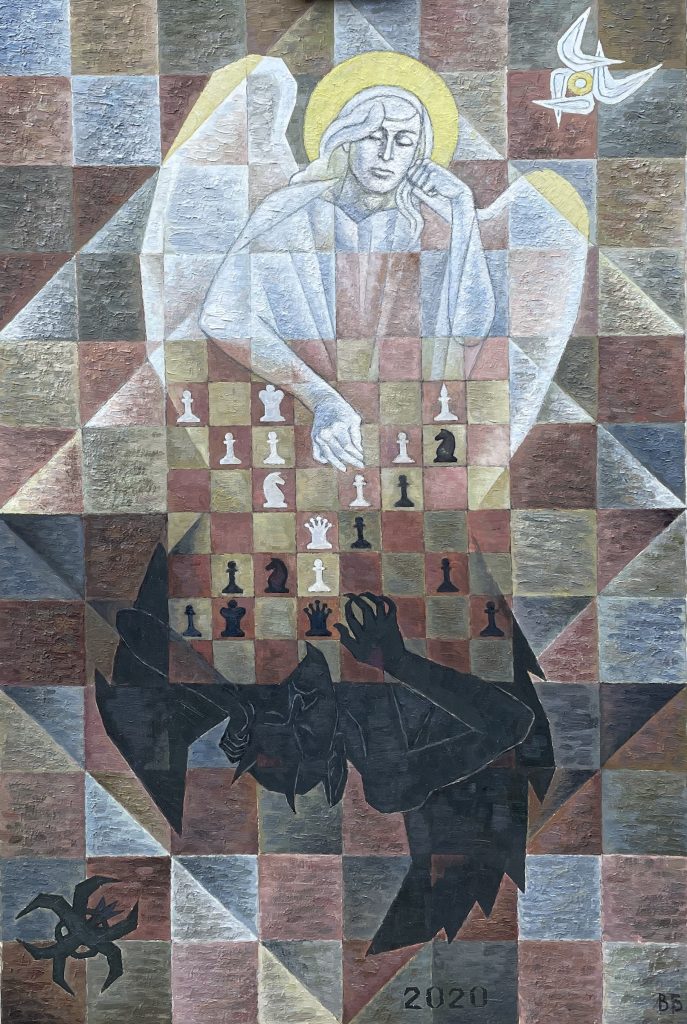
Naturally, the dramatic events of recent years that have torn Ukraine apart compelled the artist to express his civic and patriotic stance. The painting “Predator” (2017) — the hand of the aggressor revealing its expansionist nature — serves as a glimpse into the future, into the tragic year of 2022. The composition “Freedom or Death” (2020) echoes the legendary slogan of Spartacus and our warriors who defend Ukraine’s independence today. Vitalii Buigashiev — an artist and a philosopher — has always believed in the triumph of good. That is why in the painting “The Players” (2020), the Angel of Light defeats the dark force.
Through all historical cataclysms and life’s hardships — from the Second World War during his childhood to the Russo-Ukrainian war in the final years of his life — the artist carried with him a faith in humanity, a love for art, and a hope for a bright future for Ukraine.
Olha Konovalova, Associate Professor at the Department of Fine Arts,
Faculty of Fine Arts and Design,
Borys Grinchenko Kyiv Metropolitan University,
PhD in Art History
Learn more about the creative path of Vitalii Buihashev
We invite you to watch a video review of the exhibitions featuring his most striking works in oil and encaustic techniques.